The AI data centre boom led to grid infrastructure shortages. This will soon create a production shortfall in electricity-intensive commodity production, such as caustic soda, as aging infrastructure needs replacements.
Caustic soda virtually goes into every industrial process you can imagine, directly or indirectly.
A production shortfall of caustic soda, as an industrial load-bearing chemical, has a downstream effect affecting every industry.
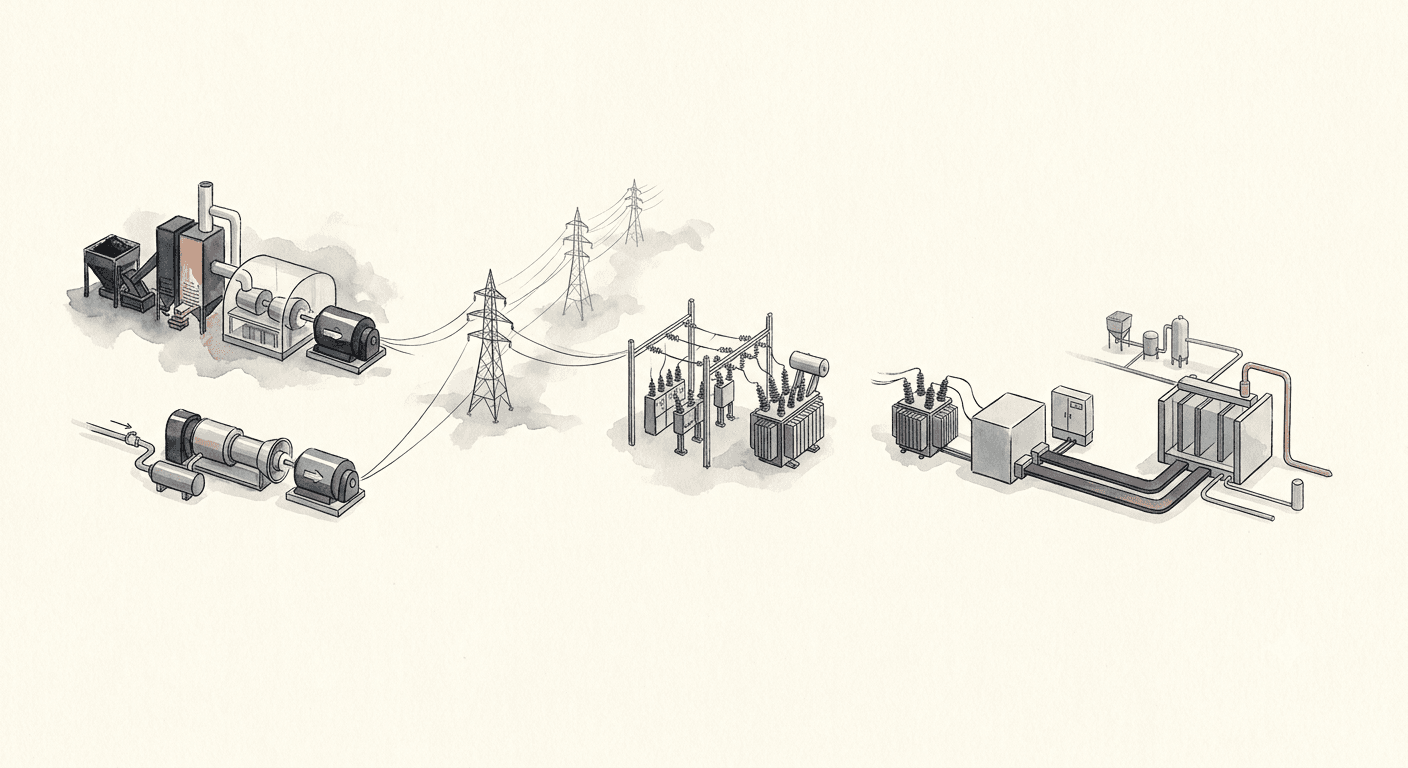
Each of the electrical sub-systems and systems is a critical electrical bottleneck for the chemical industry, in both price sensitivity and availability. They will be competed for by AI data centers and others.
This is already apparent in the prices and procurement timelines. Equipment prices of turbines, transformers, rectifiers, and DC busbars are up 20–66% since Jan-22, while procurement for the most constrained systems now takes 2–6 years.
Failure to procure critical electrical equipment, as the chemical industry's aging equipment needs replacements, threatens the sovereignty of the industry and the downstream industrial complex.
The chemical industry desperately needs a new architecture.
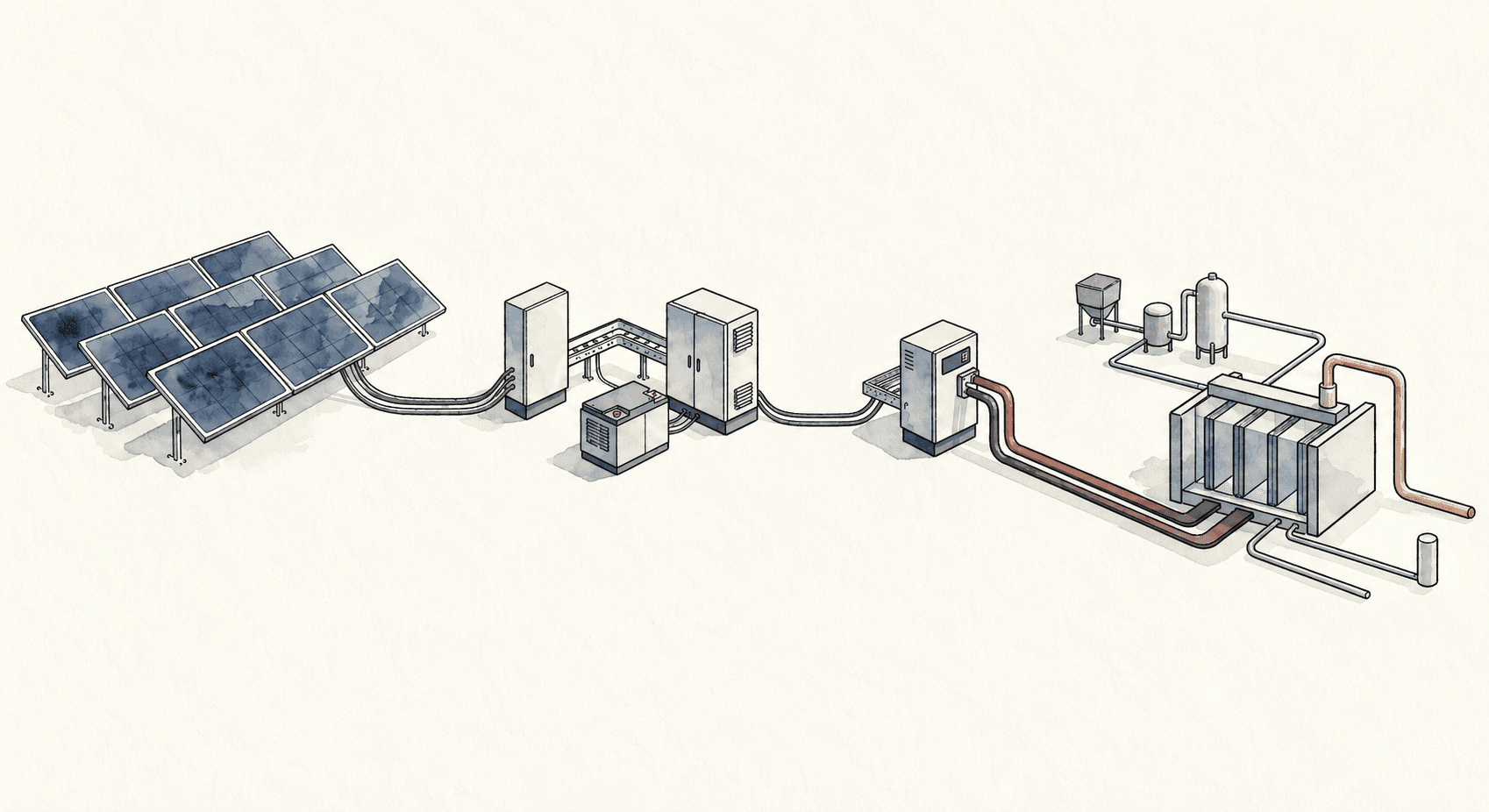
Delete the system. Delete the supply chain. Delete the cost and the bottleneck.
An architecture that skips all the on-grid equipment—turbines, transformers, rectifiers—and uses off-grid solar to directly power caustic soda production not only creates resilient supply chains but also unlocks new geographies, like California, where industrial-grid electricity prices are prohibitively high for local production.
At Hydropunk, we are building a decentralised, sovereign chemical stack for the new solar and AI age.
Send me an email at rakshith@hydropunkindustries.com if you want to chat.